

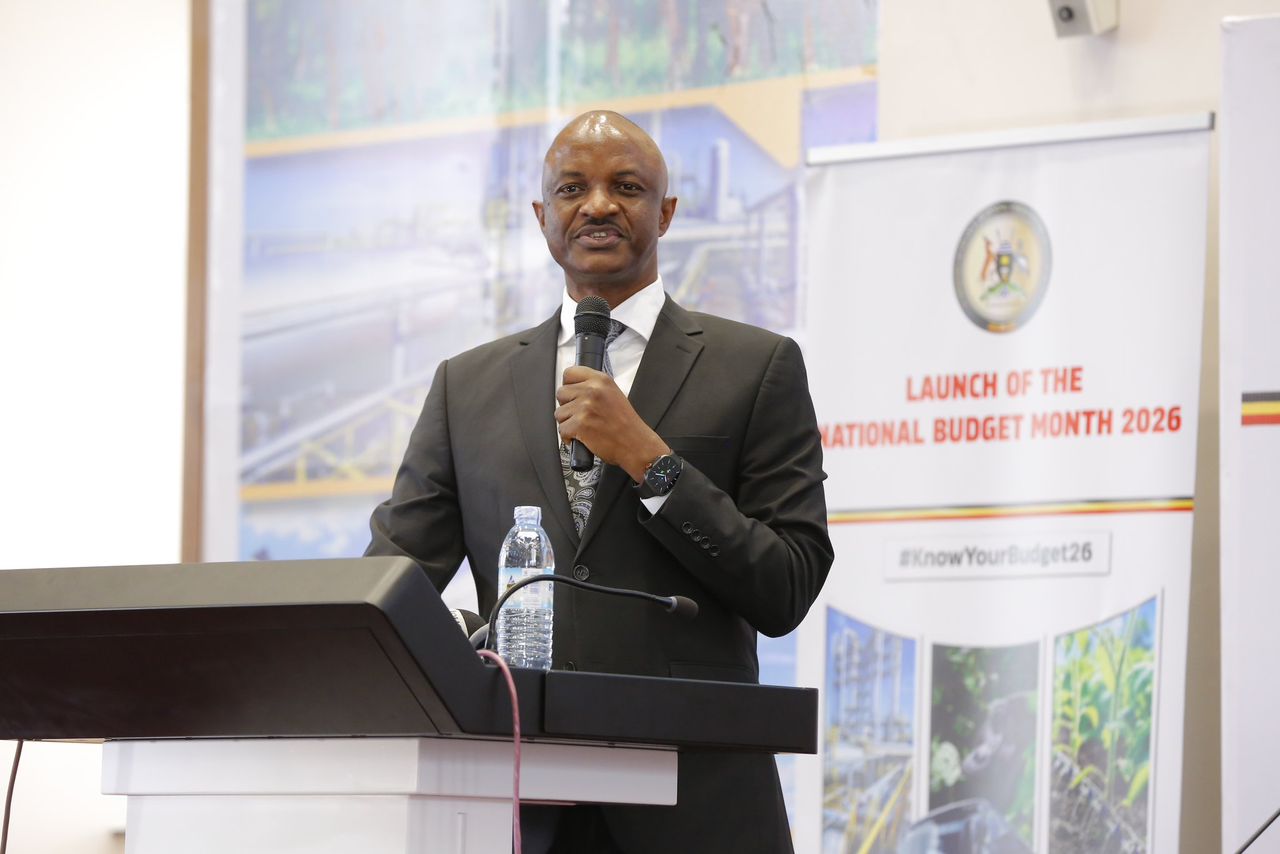
Permanent Secretary and Secretary to the Treasury Ramathan Ggoobi has launched the National Budget Month 2026 campaign, urging Ugandans to actively participate in the implementation and monitoring of the national budget to ensure government programmes deliver meaningful socio-economic transformation.
“I want every Ugandan to know what this budget is all about, where the money is going and what purpose it will serve.”
Those were the remarks of the Permanent Secretary and Secretary to the Treasury, Ramathan Ggoobi, during the launch of the National Budget Month 2026 campaign.
Ggoobi called on Ugandans to take an active role in the implementation, monitoring, and oversight of government programmes to ensure that public resources translate into tangible benefits for citizens across the country.
Speaking at the launch, Ggoobi said the preparation of the FY2026/27 national budget was guided by extensive consultations with stakeholders nationwide, in line with the Public Finance Management Act, which requires government to engage citizens and other stakeholders throughout the budgeting process.
“The law is clear. The budget is prepared in consultation with key stakeholders, including the media, the private sector, civil society, religious and cultural leaders, local governments and development partners,” Ggoobi said.
He explained that the budget preparation process began in July last year and involved consultations with President Yoweri Museveni, Cabinet, Parliament, ministries, local governments, academia, youth groups, artists, persons with disabilities, and other sections of society.
According to Ggoobi, the consultations generated valuable input that informed the FY2026/27 budget, which Parliament approved on April 24.
The budget is anchored on the theme: “Full Monetization of Uganda’s Economy through Commercial Agriculture, Industrialization, Expanding and Broadening Services, Digital Transformation and Market Access.”
Ggoobi said the theme reflects government’s commitment to accelerating socio-economic transformation and increasing household incomes through strategic investments in productive sectors of the economy.
He emphasized that while budget formulation is important, effective implementation remains the most critical stage in achieving development outcomes.
“Budgeting goes beyond preparing the budget. It also requires implementation so that the intended outcomes can be realized. This calls for meaningful participation of all stakeholders throughout the entire budget cycle, including planning, execution, monitoring and oversight,” he said.
The Treasury chief explained that National Budget Month is intended to increase public awareness about government priorities, expenditure plans, and development programmes while encouraging citizens to closely follow how public funds are utilized.
He added that the FY2026/27 budget is largely focused on driving Uganda’s socio-economic transformation through investments in the government’s priority sectors under the ATMS strategy — Agriculture, Tourism, Minerals, and Science, Technology and Innovation.
Ggoobi noted that these sectors are supported by key enablers such as security and infrastructure, which continue to receive substantial government investment.
“You cannot achieve economic growth without security and infrastructure. A significant portion of this budget is allocated to roads and other infrastructure because they facilitate production, trade and access to markets,” he said.
He further urged the media and other stakeholders to help the public appreciate the broader impact of government spending, noting that some sectors benefit indirectly from allocations made under other programmes.
For instance, he explained that investments in roads, security, and public health significantly support tourism growth even when such funding is not directly reflected within the tourism sector budget.
The National Budget Month campaign will feature a series of public engagements and awareness activities aimed at popularising the FY2026/27 budget ahead of the commencement of the new financial year on July 1, 2026.
